

Centuries of clarity.
Centuries of clarity.
Centuries of clarity.
For 800 years, the Dominican Friars have guided people to the Truth.
We exist to praise, to bless, and to preach.
St. Dominic founded his Order of Preachers over 800 years ago to preach the Gospel for the salvation of souls.


Sharing the fruits of contemplation

Parish Ministry

Thomistic Institute Campuses

Campus Ministry

Intellectual Centers


See the latest (and oldest) in media from the Dominican Friars. Watch the latest videos, podcast interviews, homilies, as well as articles, books and so much more!
Meet the Friars
Get to know our friars in formation, and recently ordained friars
Fr. Louis Bethea, O.P.
Springfield, CA
Carnegie-Mellon University
University of Akron
Fr. Gregory Santy, O.P.
Syracuse, NY
Catholic University of America
Fr. Bertrand Hebert, O.P.
Crowley, LA
Catholic University of America
Fr. Basil Burroughs, O.P.
Kingston, Ontario
Queen’s University
Fr. Titus Sanchez, O.P.
Fort Worth, TX
Southern Methodist University

The Latest from the Friars

Mary’s Sorrow and Discipleship
No one is exempt from sorrow. By faith and following Christ as a disciple our pain can be redemptive for ourselves and for others.


A Legacy of Forming Future Preachers
Upcoming Events
"Laugh to your heart's content... and be as merry as you please, my dearest sons."
St. Dominic, Lives of the Brethren

September 26, 2026
The Dominican Rosary Pilgrimage
The Basilica of the National Shrine of the Immaculate Conception
Washington, DC

September 27, 2026
Fall Social
Dominican House of Studies
Washington, DC

October 1, 2026
Street Co-Naming Ceremony | Rose Hawthorne Way
Corner of East 68th Street and 1st Avenue
New York, NY

DON’T MISS A THING
Stay Connected
Stay connected with the Friars for the latest updates, news, and exclusive offers by subscribing to our newsletter or following us on social media.
As featured in
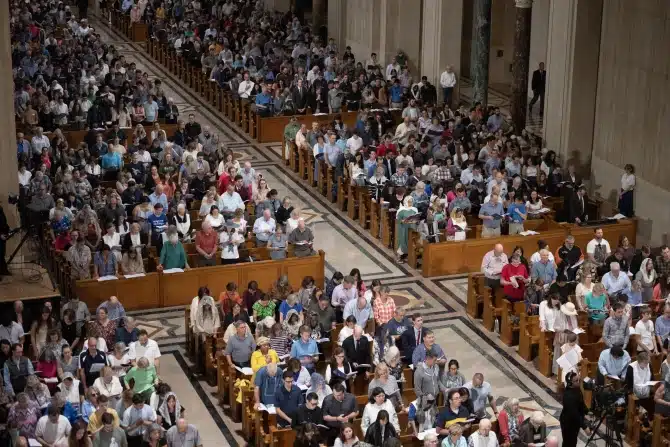
Dominican Friars announce date of annual rosary pilgrimage and novena


A Hub of the Hub: NYU's Catholic Center
Manhattan’s bohemian Greenwich Village neighborhood might seem an unlikely spot for a hotbed of Catholic conversions, but that’s exactly what you’ll find at the Catholic Center at New York University...

Pope Leo receives 4 albums from Billboard Chart-topping Hillbilly Thomists
In a private audience at the Vatican, Dominican priest Father Thomas Joseph White gave Pope Leo XIV four albums from his bluegrass band, the Hillbilly Thomists...
